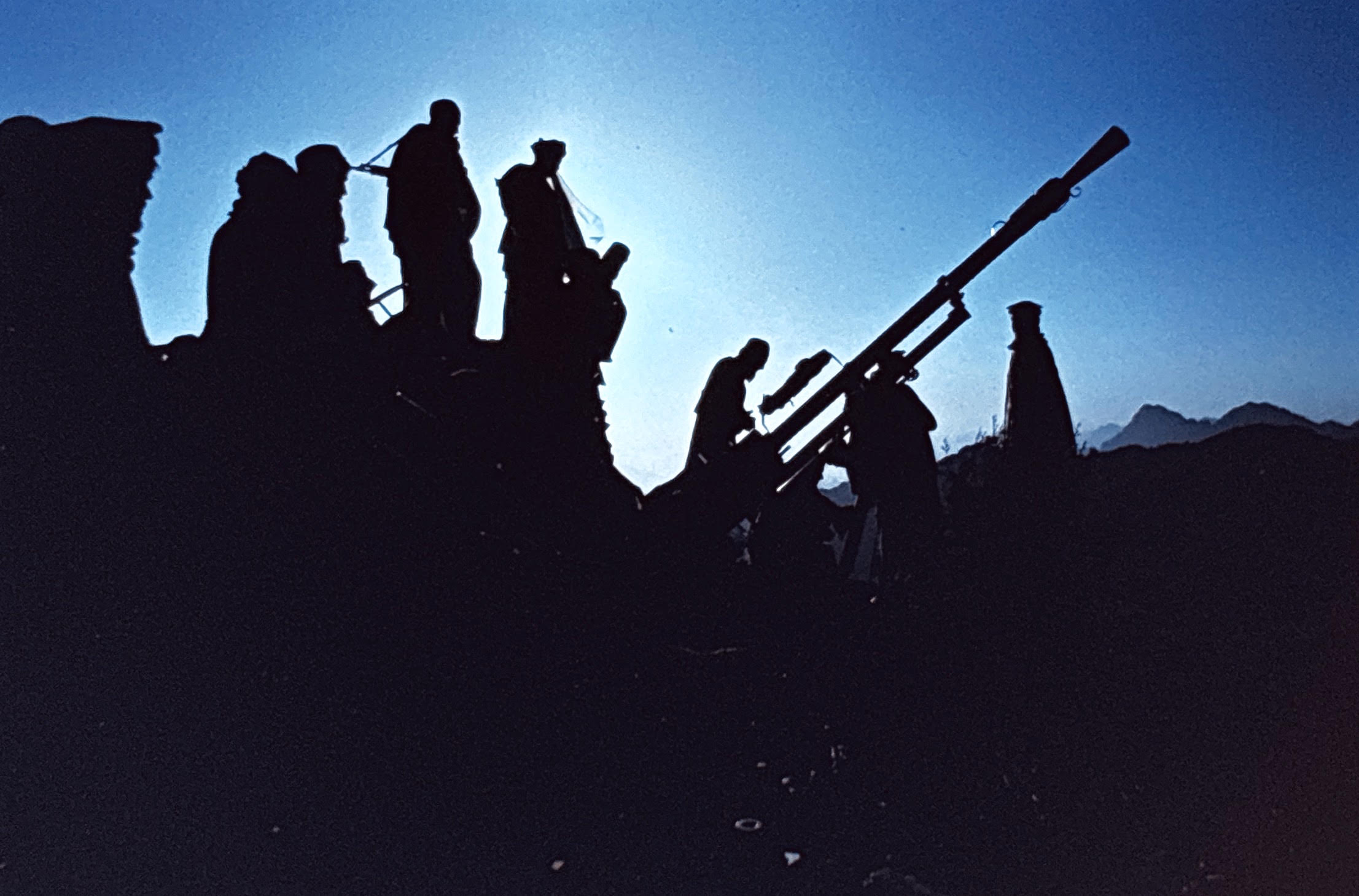
NOTES FROM THE PREVIOUS AFGHAN WAR By GM Foy *** The Montréal Review, July 2026 |
|||
Photo: G.M. Foy
WALK THE PAGAN VALLEY
To reach the valley of the pagans G. hired a driver and car. He shared the cost with four other Westerners. The car was a Land Rover that had survived Partition. Their driver scratched his crotch with one hand as he ground the car up donkey tracks with schist rising sheer on one side and on the other, mere inches from bald tires, a hundred-foot drop into rocks. Around them the peaks of the Hindu Kush rose into clouds where they dressed themselves in cold and snow. Around him the faces of the other Westerners turned white also. An Englishman said, He's barking, it'd be safer to walk. A Belgian with the tanned eyes of jaundice tried reasoning with the driver, calling him my friend. My friend, you must go slower, no? The driver scratched his crotch. Once there G. wanted out: the driver said a path led from the valley's head, into the mountains, over a pass and down into the next valley to the south. But it is too late, he added, you cannot walking now. The driver only scratched his crotch while driving. Now he seemed tired, and sick of foreigners, though they were how he made a living; though he'd been hired to drive them back. G. too was sick of Westerners, of their brute agendas. He was sick also of Pakistanis with jock itch and agendas that were less clear. He would have liked to talk to the locals, who dressed in robes of gray and red and watched in silence from terraced gardens, and from their houses: half cliff-dwelling, half chalet; but they did not speak English. Some did not even speak Urdu. Isolation had preserved them from Islam. Perhaps as war drew ever nearer they trusted in isolation to preserve them from violence and tourism. Good luck with that, G. thought. 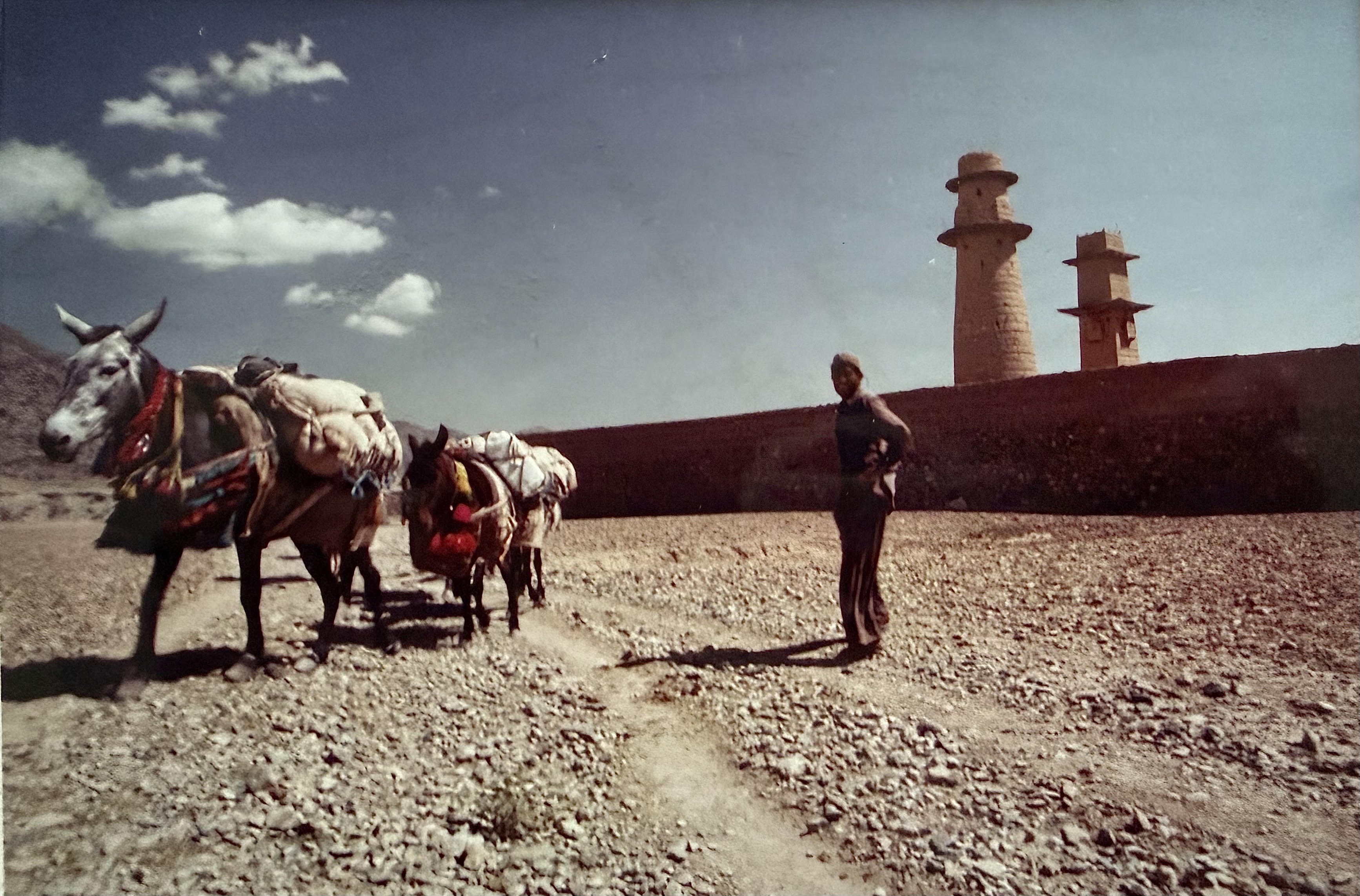
Photo: G.M. Foy He climbed the path leading up the valley. At the village's end women yelled and made signs he supposed were universal: arms raised, a pushing motion, "go back." Thunder grumbled. He stopped. The sun was sinking behind a peak, dark clouds were gathering. G. knew enough of mountains to list the rules: Don't climb alone. Get back before dark. Carry water, compass, poncho; a flashlight, just in case. Tell someone where you're going, when you're due back. But something in him now rebelled, against the rules, against the illusion that he knew how to handle himself: at sea, in mountains, in the war that simmered nearby, below the smear of sunset. Standing at the head of the valley of pagans he knew that he was helpless. And alone—he'd felt isolated for weeks now. Alone in his hotel room, waiting, trying to write about a war over the mountains while bombs went off, a couple a day, in the streets outside. He'd lived a life of taking risks that were small and neatly calibrated. So he kept going. He was not sure why, then or later. In part it was because he was sick of himself and all his calculations when ten miles away, or in this valley even, people risked and lost their lives in gambles he would always spurn as poorly weighted. In part, he felt as if by climbing to the top of this village, at this point in his life, he had crossed into a loneliness so vast that it seemed to change the relative value of everything. He could not gauge it better than that. Such analysis was, in any case, exactly what he wished to avoid. The valley narrowed as he climbed, became a gorge strewn with limestone rocks, all broken, shattered, cracked, through which he had to pick a twisted path. Thunder rumbled louder, the cliff walls strobed with lightning. It started to rain in drops that felt solid on his pate. The drops dislodged pebbles at the cliffs' top, that rolled, bringing other pebbles with them, and then small rocks, until he had to choose a track near the gorge's overhang to avoid being hit. This ravine would become a torrent in any sort of storm; it would pick up anyone stupid enough to be in it at the time and bounce, shatter, grind him in its rocks and rush. The pagans relied on floods to dispose of their dead, they buried them on the banks of a stream lower down and when floodwater rose the corpses were washed out, floated off, and the torrent minced them to jackal meat. The thought cheered G. This was such a classic mistake. His catechism teacher, Père Coutelier, who had served in a different colonial war in Algeria, once told the class about a troop of soldiers who took shelter in a wadi during a storm. And then the rain arrived. They managed to drown in a desert, Père Coutelier concluded, no doubt using this to craft a homily. The kids had giggled. This rain stopped when he was halfway up the gorge, and soon enough G. came to the end of the defile, and a path that led upward through stunted conifers to a meadow and beyond, a different riff of mountains, now mauve with dusk. He had reached the pass. A fat, twisted tree stood alone at the top. The way down led through more forest, and then fields of some plant he did not recognize in the dark. He thought, no one has any idea where I am. He felt as free as he'd ever felt in his life. Maybe that was how these pagans had once felt, he reflected. If no one knew where you were, were you invisible? He spent the night in a chai house filled with dark robed men who neither ignored nor paid attention to him. They all ate goat stew together from a pot cooking on an open hearth, then slept on beds of woven rope clustered around the fire for warmth and light. Occasionally one of the men murmured something, and another responded with a grunt or comment. To the Westerner it felt good that these men he could not understand were talking to each other in the dark; and while he knew that he would leave this valley in the morning, find some truck or cart to drive him back to town, lying there he found himself wishing the night would not end so that he could stay as long as he wanted, or maybe—he wasn't serious about this, but the idea was sweet, the way extremes could please simply by tempting—maybe not ever leave.
BOMB DISPOSAL
The men in the hotel lobby were spies, and they liked to rub it in. The day I came back from the consulate one of them rose grinning from the couch and asked if I'd enjoyed my talk with CIA. I was so freaked at having been shadowed that I went to my room and practiced, over and over, the three jujitsu moves I'd learned from a streetfight expert on 72nd Street. I don't know how I hoped to defend myself with three moves but it made me feel better, it gave me the illusion I would not go quietly ... Peshawar was full of spies back then, most of them worked for the Russians. They set off bombs every two days on average. One exploded a block from my hotel, it made a curious bubble sound, as if the great noise generated had been gulped by its own force. The lights flickered, went out. I ran around the corner to Sunehri Masjid Road. It was a car bomb, not much was left of the car. They were carrying an old man away, they didn't bother with a stretcher, he wasn't going to get any deader. A horse, also dead, lay in a pond of blood. Men stood around, smoking. No one seemed surprised. I interviewed the chief of the bomb disposal squad. He was a police colonel in his fifties with a tin-colored moustache and eyebrows so long they looked like cow-catchers for his eyes. He showed me a room full of bombs he had defused. The bombs were of all types and sizes: boxes with landmines cached inside; cakes of plastic explosive molded into bricks, books, cylinders. Next to the explosives lay detonators made of radios and alarm clocks. Some of the bombs had wires poking out, and when the colonel touched them, demonstrating how he took them apart, I experienced a weird certainty that his eyebrows were live and he could use them to sense what would blow and what was stable. The cakes of plastique sweated in the mindless heat. Could those go off if they get hot enough? I whispered to Atis, who laughed. Atis had come with me to interview the colonel. He was a Latvian. He wrote for Soldier of Fortune magazine but he was really there because he hated Russians and wanted to join the Mujahideen who were fighting them next-door, in Afghanistan. A lot of writers lived in Peshawar then, hoping to go over the border, and most of them were men and most of them hated something or someone badly enough to sit in Peshawar for weeks, months, when it was 105 in the shade; hanging by the phone for their Mujahid to call. I was no different. I didn't hate anyone but I had been going out with a former actress and she hated her father. Her father was a spy also, for the US. He was a colonel in the Defense Intelligence Agency. He was a drunk. His daughter claimed he had molested her repeatedly when she was fifteen. As soon as she turned eighteen she married an Air Force major of Latvian origin to get away from Dad. To get away from the Air Force she left the major, and their newborn, in Texas. She changed her name, moved to New York, and became an actress. She took back her child. Her old name was Lisa. Her made-up name was California Smith, Cali for short. 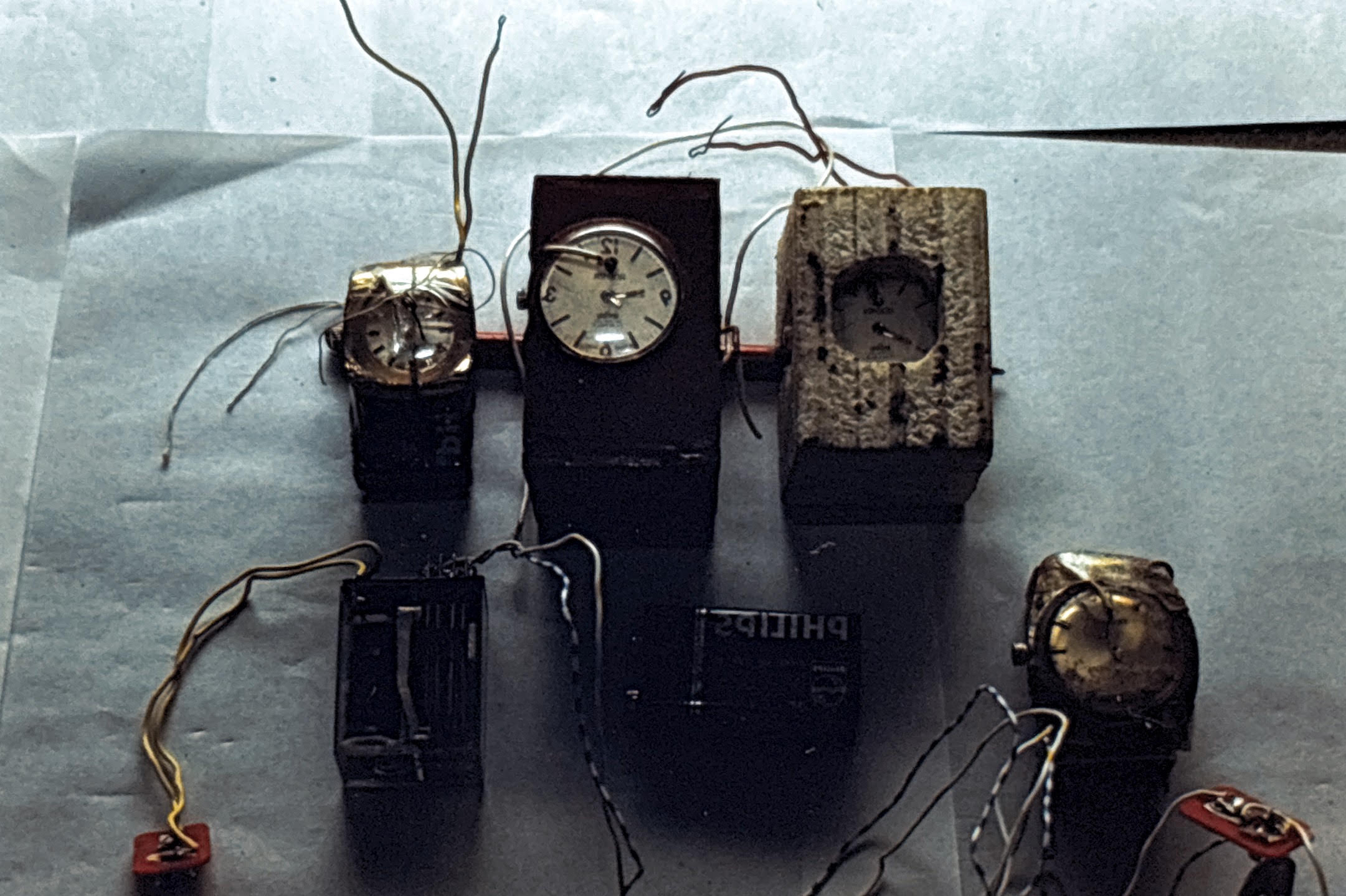
Photo: G.M. Foy Cali never stopped reinventing herself. After she failed to seduce Broadway or even off-off-Broadway she became an ad executive, a sculptor, a veterinarian's assistant. I don't know if you've ever lived with someone who constantly reinvents herself but it's exhausting, like lying next to an engine running at full tilt to pump fuel into itself because it uses so much fuel in running that it's always about to stall. I had come to write about the war in Afghanistan to get away from the stress, to figure out what to do next. Maybe I was reinventing myself a little, too. A lot of the men who hated things were trying to reinvent themselves, partly because what they really hated lay inside them. It was an old game, the Great Game: European men projecting their neuroses on a screen of exotic lands and dark-skinned natives. We all grew beards and wore native dress and snuck into Tribal Areas where we weren't supposed to go. The lucky ones went over the border with groups of Afghans who a few years on would decide, with some reason, they hated all firangi, and from that point on would seek to kill us. I went over the border as well. My Mujahideen were part of Hesb-i-Islami-Khalis, the group that later would spirit Usama bin Laden out of Tora Bora. They wound a brown Pashtun turban around my head, handed me an assault rifle, and offered to take photographs. "You are Mujahid now," they told me, grinning, and part of this was sucking up to someone who might publicize their group, which could mean more dollars for assault rifles: and mostly it was a joke. They were expert smugglers and guided me in and out of Afghanistan with speed and efficiency and we only got shot at once, probably by other Mujahideen. When I got home I went back to the room I rented, which was really a big closet in a shared flat on West 109th Street. California came to see me. I was twenty pounds lighter, because of dysentery, and had double pneumonia from going over a glacier in Chitral in the back of a pickup truck and then sitting in a smoky plane for fifteen hours. Her dad had died last month, Cali told me. She had asked her old boyfriend, whose name was Kent, to help her drive the DIA colonel's 1947 MG from Florida back to New York so she could sell it. She had slept with Kent in various motels as they wound their way up the East Coast. She said she was sorry. "I made him wear twenty condoms each time," she said. This was meant to reassure me. It was hot in the closet, the air seemed to vibrate around her, or maybe that was fever. I thought of that room full of sweating plastique the Latvian was sure would not explode. I thought of how the bomb disposal colonel had touched the detonator wires softly, almost with love, as if his eyebrows had somehow sweet-talked the bombs into not going off.
|


Art Note: Kunar Valley, Afghanistan (1986). Hands, weapons, cloth — held in a stillness that asks to be read as care before it's read as anything else. © James Nachtwey / VII Photo Agency. Prints available. No commercial use claimed.